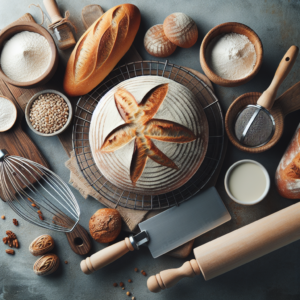

Bread scoring is an essential technique in the art of artisan baking, often overlooked by beginners but revered by seasoned bakers. It involves making deliberate cuts on the surface of the dough just before baking. These incisions serve both an aesthetic and functional purpose, allowing controlled expansion during oven spring and imparting a distinct, often signature appearance to each loaf. Mastering bread scoring can significantly elevate the quality and visual appeal of your artisan loaves, transforming them from simple bread to show-stopping creations.
The Science Behind Scoring
To fully appreciate the art of scoring, one must understand the science that underpins it. During the baking process, bread undergoes a rapid rise known as oven spring. This is when the yeast activity spikes due to the heat, producing carbon dioxide gas that causes the dough to expand. Scoring provides weak points in the dough’s surface, directing this expansion in a controlled manner. Without scoring, the bread might burst unpredictably, leading to an irregular shape and potentially dense texture.
Moreover, scoring affects the crust’s texture. The cuts create more surface area, promoting a crispier crust. This is particularly desirable in artisan loaves, where a crunchy exterior juxtaposes a soft, airy crumb.
Tools of the Trade
To score bread effectively, having the right tools is essential. Here are a few indispensable items for any artisan baker:
– **Lame:** A lame is a specialized tool with a razor-sharp blade used for scoring. It allows for precise cuts and can be adjusted for different angles and depths.
– **Sharp Knife:** In the absence of a lame, a very sharp knife can suffice, though it might not offer the same precision.
– **Bench Scraper:** While typically used for handling dough, a bench scraper can also assist in making rustic, bold cuts.
– **Flour:** Lightly dusting the dough with flour before scoring can help highlight the cuts, enhancing the loaf’s visual appeal.
Techniques for Mastering Bread Scoring
Bread scoring is as much about technique as it is about creativity. Here are some techniques to help you master this art:
Understanding Dough Behavior
Different doughs react differently to scoring. High hydration doughs, such as those used for ciabatta, spread more easily and require quick, decisive cuts. Conversely, lower hydration doughs like baguettes hold their shape better, allowing for more intricate patterns. Experimenting with different doughs will improve your understanding of how each type responds to scoring.
Timing is Key
The timing of scoring is crucial. Score the dough just before it goes into the oven to prevent the cuts from sealing up. If you wait too long, the dough may dry out or over-proof, affecting the oven spring and the final appearance.
Angle and Depth
The angle and depth of your cuts significantly impact the loaf’s final look. Shallow cuts (around ¼ inch deep) are ideal for decorative scoring, creating intricate designs that remain on the surface. Deeper cuts (around ½ inch or more) are necessary for functional scoring, allowing the loaf to expand without bursting. The angle of the blade should be around 30 to 45 degrees for most cuts.
Design Inspiration
The design possibilities are endless when it comes to scoring. Classic patterns such as the chevron or ear are timeless and beautiful. However, don’t shy away from experimenting with your designs. Use nature, art, or architecture as inspiration to create unique patterns that reflect your style.
Practical Tips for Better Scoring
Here are some practical tips to help you score like a pro:
Practice Makes Perfect
As with any skill, practice is essential. Start with simple patterns and gradually progress to more complex designs as you gain confidence and control.
Keep It Swift
Make your cuts quickly and confidently. Hesitation can lead to jagged, uneven lines. A swift motion ensures clean, smooth cuts that enhance the loaf’s appearance.
Adjust According to Dough Consistency
Pay attention to the dough’s firmness. Firmer doughs require more pressure, while softer doughs need a lighter touch. Adjusting your technique accordingly will improve your results.
Use a Guide
If you’re attempting a complex pattern, lightly draw the design on the dough with a toothpick or the back of a knife before making the cuts. This guide can help you achieve symmetry and precision.
The Art of Personalization
Bread scoring offers a unique opportunity for personalization. Just as a painter leaves their signature on a canvas, a baker’s scoring pattern can become their hallmark. This personal touch not only makes each loaf unique but also elevates the baking process from mere preparation to an art form.
Common Mistakes and How to Avoid Them
Even experienced bakers can encounter challenges when scoring. Here are some common mistakes and how to avoid them:
Over-Proofing
An over-proofed dough lacks the strength to hold the cuts, often resulting in a deflated loaf. Keep a close eye on proofing times and perform a poke test to ensure the dough is ready for the oven.
Under-Proofing
Conversely, under-proofed dough can be too tight, causing erratic expansion and tearing. Ensure your dough has adequately risen before attempting to score it.
Uneven Cuts
Inconsistent scoring can lead to uneven oven spring. Practice maintaining consistent pressure and speed to achieve uniform cuts.
Conclusion: Elevating Your Artisan Loaves
Mastering bread scoring is an invaluable skill that can elevate your artisan loaves to new heights. It combines the precision of technique with the creativity of design, resulting in bread that is not only delicious but also a feast for the eyes. By understanding the science, honing your technique, and embracing creativity, you can transform your baking from a routine task into an artistic endeavor. So, grab your lame, embrace the dough, and start scoring your way to bread-making excellence. Your journey into the art of bread scoring awaits, promising both challenges and the sweet satisfaction of a perfectly crafted loaf.
#ChatGPT assisted in the creation of this article.