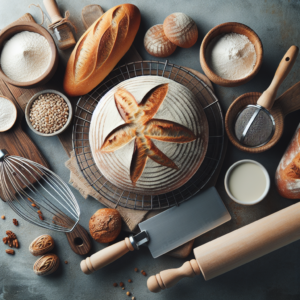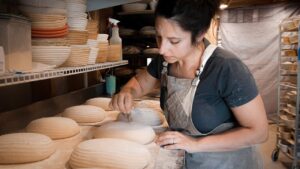

Bread baking has often been perceived as a labor-intensive process, requiring time, patience, and skillful kneading. However, the no knead bread technique revolutionizes this by simplifying the process, making artisan-quality bread accessible to everyone. This method leverages time and moisture to develop gluten, creating a loaf with a beautiful crust and tender crumb without the extensive manual labor traditionally associated with bread making. Let us delve into the effortless world of no knead bread techniques and discover how you can start baking your own artisan bread today.
The Origins of No Knead Bread
The no knead bread technique was popularized by Jim Lahey of Sullivan Street Bakery in New York City in the early 2000s. His method, published in “The New York Times,” transformed home baking. Lahey’s approach highlighted that with minimal ingredients, a bit of time, and the right technique, anyone could produce bakery-quality bread at home. His revolutionary idea sparked a movement that has since been adopted and adapted by bakers worldwide.
Understanding the Science Behind No Knead Bread
Traditional bread baking relies on kneading to develop gluten, the protein that gives bread its structure and chewiness. The no knead method, however, relies on a high hydration dough and a long fermentation period to achieve the same effect. The extended resting time allows the dough’s natural enzymes to break down the flour and develop gluten strands gradually. This process not only simplifies the method but also enhances the bread’s flavor as the slow fermentation encourages deeper, more complex flavors.
Hydration and Fermentation
A key factor in the no knead technique is the dough’s hydration level. With a water-to-flour ratio typically around 80%, the dough is quite sticky, which might seem intimidating to novice bakers. However, this high moisture content is crucial for gluten development and helps produce a bread with a moist, airy crumb.
Equally important is the fermentation period. Allowing the dough to rest for 12-18 hours at room temperature enables natural yeast and bacteria to ferment the dough. This slow fermentation not only builds gluten but also contributes to the bread’s flavor profile, lending subtle sour notes and a rich complexity.
The Role of Equipment
While the no knead technique is simple, having the right equipment can enhance the baking process. A heavy-duty cast iron or ceramic Dutch oven is often recommended. This type of pot creates a mini-steam oven environment, crucial for achieving the bread’s characteristic crispy crust. The heat retention and even distribution provided by a Dutch oven also contribute to the bread’s overall texture and rise.
Step-by-Step Guide to No Knead Bread
Ready to try no knead bread for yourself? Follow these steps to bake your own loaf:
Ingredients
– 3 cups all-purpose or bread flour
– 1/4 teaspoon instant yeast
– 1 1/4 teaspoons salt
– 1 1/2 cups water (room temperature)
Instructions
1. **Mix the Ingredients:** In a large bowl, combine the flour, yeast, and salt. Add the water, stirring until blended. The dough will be shaggy and sticky, but that’s okay.
2. **First Rise:** Cover the bowl with plastic wrap or a clean kitchen towel. Let the dough rest at room temperature for 12-18 hours. You’ll know it’s ready when the surface is dotted with bubbles and the dough has doubled in size.
3. **Shape the Dough:** Generously flour a work surface and your hands. Turn the dough out onto the surface, sprinkle with a little more flour, and fold it over on itself a couple of times to shape it into a round. Let it rest for 15 minutes.
4. **Second Rise:** Using a well-floured towel or parchment paper, place the dough seam side down and cover it with another towel. Let it rise for about 1-2 hours, until it has doubled in size.
5. **Preheat the Oven:** About 30 minutes before the dough is ready, preheat your oven to 450°F (230°C). Place your Dutch oven in the oven as it preheats.
6. **Bake the Bread:** Carefully remove the hot pot from the oven. Gently slide your hand under the towel or parchment paper and turn the dough into the pot, seam side up. Shake the pot gently to distribute the dough evenly.
7. **Cover and Bake:** Cover with the lid and bake for 30 minutes. Then, remove the lid and bake for an additional 15-20 minutes, until the loaf is golden brown and sounds hollow when tapped.
8. **Cool and Enjoy:** Carefully remove the bread from the pot and let it cool on a wire rack. Once cooled, slice and enjoy your homemade artisan bread.
Tips for Perfecting No Knead Bread
While no knead bread is straightforward, a few tips can help ensure success and refine your technique:
– **Temperature Control:** Room temperature can affect fermentation time. If your kitchen is cooler, consider extending the rise time slightly. Conversely, if it’s warm, keep an eye on the dough to prevent over-fermentation.
– **Flour Variations:** Experiment with different types of flour such as whole wheat, rye, or spelt. Adjust the water content accordingly, as whole grain flours may absorb more moisture.
– **Add-Ins:** Personalize your loaf by incorporating ingredients like olives, herbs, nuts, or seeds. Mix these into the dough during the initial mixing stage.
The Benefits of No Knead Bread
The appeal of no knead bread extends beyond its simplicity. The method encourages creativity, experimentation, and a deeper connection to the bread-making process. It also fosters a sense of accomplishment, knowing that with minimal effort, you can produce a loaf rivaling those from artisan bakeries.
Moreover, the technique is forgiving and adaptable. Whether you’re a novice or an experienced baker, no knead bread allows you to explore different flavors and textures without the pressure of perfection. It’s an ideal entry point for anyone looking to explore the world of bread baking.
Conclusion
The no knead bread technique has democratized bread baking, making it accessible and enjoyable for everyone. By understanding the basic principles and embracing the simple process, you can create homemade bread that is not only delicious but also a testament to the power of patience and simplicity. So why not give it a try? Discover the effortless satisfaction of baking your own no knead bread today, and let the aroma of freshly baked bread fill your home.
“`
#ChatGPT assisted in the creation of this article.